
Key Takeaways
Summary: Charging at low temperatures triggers "lithium plating," causing irreversible capacity loss and safety hazards.
Safety guidelines: You can discharge in the cold — never charge in the cold! (Safe charging range: +5°C to +45°C / 41°F to 113°F)
What this article covers: Why you can't charge at low temperatures · Why discharging in the cold is okay · Winter charging solutions
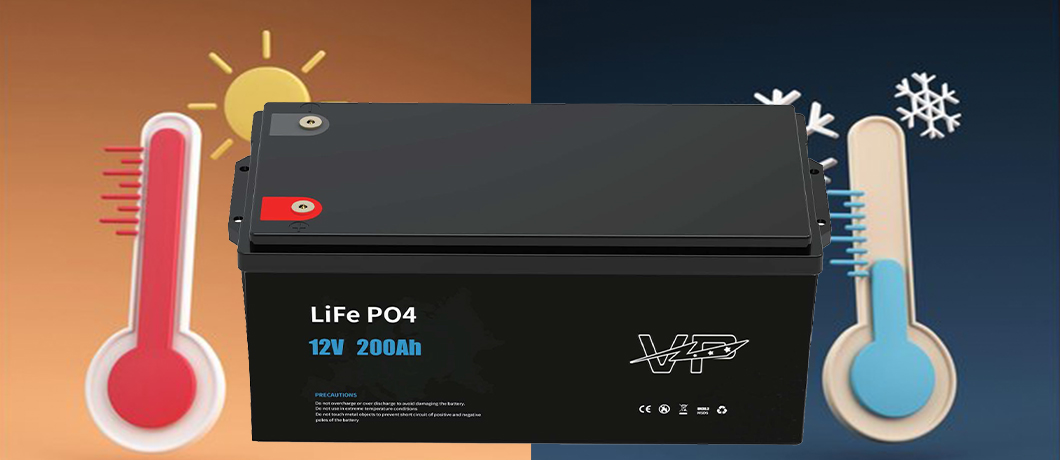
Your Lithium Battery, Frozen Solid
RV winter campers and outdoor solar energy storage systems in northern climates frequently experience "unable to charge" errors or sudden drops in battery lifespan.
Many users see "operating temperature: -30°C" on the spec sheet and assume charging and discharging work the same way in the cold.
The Core Science — What Is Lithium Plating?
Normal Temperature: How Lithium Ions Move
At normal temperatures, lithium ions intercalate smoothly between the positive and negative electrodes. Charging proceeds safely with no risk.
What Happens Below 0°C?
|
Problem |
Description |
|
Electrolyte becomes viscous |
Low temperatures increase electrolyte viscosity, sharply reducing ionic conductivity and raising internal resistance |
|
Negative electrode loses activity |
The graphite anode slows its ability to accept lithium ions |
|
Charging forces ions in anyway |
Lithium ions pile up on the anode surface, triggering lithium plating and dendrite formation |
The frozen parking garage analogy: Think of the graphite anode as a multi-level parking garage with gates, and lithium ions as the cars. At normal temperatures, cars flow in through the gates and park in an orderly fashion. Below 0°C, the gates are frozen shut — lithium ions pile up outside → lithium dendrites form → permanent capacity loss + potential safety risk.
Cold-Temperature Charging vs. Cold-Temperature Discharging
|
Dimension |
Charging |
Discharging |
|
Ion movement direction |
Positive → Negative (intercalation into graphite) |
Negative → Positive (de-intercalation) |
|
Electrochemical reaction |
Forced insertion; high demand on anode acceptance |
Natural release; positive electrode is accommodating |
|
Heat behavior |
Endothermic; temperature is difficult to raise |
Exothermic; reaction sustains its own temperature |
|
Risk outcome |
High risk (lithium plating, dendrite short-circuit) |
Low risk (temporary capacity reduction, voltage drop) |
⚠️Conclusion: You can discharge in the cold. You must never charge in the cold.
Low-Current Charging Is Not a Safe Workaround
The myth: "Charging at 0.05C is fine at -10°C."
The truth: Low current only reduces the severity of lithium plating — the physical risks below 0°C remain. Don't gamble with your battery against those odds.
Winter Low-Temperature Charging Solutions
- Solution A: Passive Protection (Zero Cost)
Method: Use a battery with a low-temperature charging protection BMS.
How it works: The BMS detects temperatures below +5°C and automatically cuts off the charging circuit.
- Solution B: Physical Warming (Low Cost)
Bring it indoors: Move the battery inside and wait until the temperature rises above +5°C before charging.
Improve installation location: Relocate the battery inside the RV cabin or into a heated environment.
- Solution C: External Heating (Intermediate)
Use a thermostatically controlled heating pad or insulated enclosure.
Integrate with your solar system: divert a portion of solar production to heat the battery first, then begin charging once the temperature is safe.
- Solution D: Self-Heating Battery (High Budget)
Internal heating element activates → temperature reaches +5°C → BMS switches to charging circuit.
The premium solution: convenient, hands-free, and the safest option available.
Winter Battery Storage Guide
State of charge: Store at 40%–60%
Environment: Keep dry; avoid extreme sub-zero temperatures
Maintenance: Check voltage every 2–3 months
Frequently Asked Questions
Q1: I charged my battery in the cold — is it damaged?
Capacity loss or abnormal charging behavior may indicate irreversible damage has already occurred.
Q2: Is a smartphone lithium battery the same as a LiFePO4 battery?
The underlying chemistry is similar, but smartphones typically use NMC (nickel manganese cobalt) lithium, which tolerates cold slightly better. Smartphones also benefit from passive heating generated by the CPU