
Key Conclusion
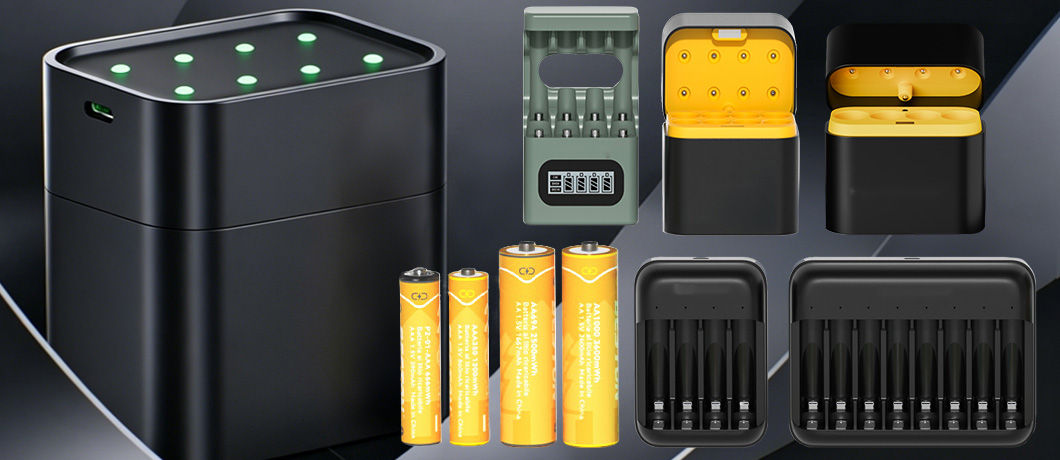
Direct interchangeability is not possible. 1.2V NiMH battery chargers typically use constant current charging with a -ΔV cutoff algorithm, which cannot provide the correct CC-CV (constant current-constant voltage) charging curve required for 1.5V lithium-ion batteries; conversely, using a Li-ion charger for Ni-MH batteries also carries a risk of overcharging. Prior to making bulk purchases, it is imperative to verify that the charger's protocol is fully compatible with the battery's chemical system.
I. Core Differences Between the Two Battery Charging Systems
1.2V Ni-MH Charging System
Nominal voltage: 1.2V, approximately 1.45V when fully charged
Charging algorithm: Constant Current (CC) + -ΔV / Temperature Cutoff
Relatively high self-discharge rate: 1–5% per month
Cycle life: 500–1,000 cycles
Mature supply chain; low procurement costs
1.5V Li-ion Charging System
Nominal voltage: 1.5V, built-in DC-DC voltage regulation
Charging algorithm: Constant current (CC) + -ΔV / temperature cutoff
Extremely low self-discharge rate: <2% per year
Cycle life: 1,000–2,000 cycles
Stable voltage platform; suitable for precision equipment
II. Charger Compatibility Quick Reference Table
| Charger Type | 1.2V Ni-MH Battery | 1.5V Li-ion Battery | Risk Level |
|---|---|---|---|
| Dedicated Ni-MH (-ΔV) | ✓ Compatible | ✗ Incompatible | High — Overcharge Risk |
| Dedicated 1.5V Li-ion (CC-CV) | ✗ Incompatible | ✓ Compatible | High — Undercharge/Damage |
| Multi-Chemistry Smart Charger | ✓ Compatible | ✓ Compatible | Low — Recommended |
| USB 5V Universal (No Protocol) | ⚠ Requires Verification | ⚠ Requires Verification | Medium — Dependent on Internal BMS |
III. Three key points to check if the old charger is compatible with the new rechargeable battery
The charging protocols of the two are fundamentally different in terms of cutoff voltage, current control logic and safety protection mechanisms. The direct consequences of using the wrong charger include: battery swelling, accelerated capacity decay, and, in extreme cases, thermal runaway.
To ensure safety and battery longevity, please verify the following three key points before use:
- 1. Confirm the Battery Chemistry Type
Ni-MH vs. Ni-Cd: If your old charger was designed for Nickel-Metal Hydride (Ni-MH) batteries, it is typically compatible with older Nickel-Cadmium (Ni-Cd) batteries, and vice versa (though using an old Ni-Cd charger for Ni-MH batteries may result in an incomplete charge).
Lithium-ion (Li-ion) Battery Warning: Never use a traditional NiMH battery charger to charge new 1.5V rechargeable lithium batteries. Lithium batteries require specialized voltage control logic. If the charger does not support lithium battery mode, it may cause the battery to overheat. - 2. "Dumb Charging" vs. "Smart Charging" (Charging Logic)
Old-style "Dumb Charging" (Timer-based): Many older chargers lack an automatic shut-off feature once the battery is fully charged; instead, they rely on a timer (e.g., cutting power after being plugged in for 10 hours). If the new battery has a relatively low capacity, subjecting it to prolonged "force-charging" in this manner will shorten its lifespan.
Smart Chargers: If your old charger can automatically detect the battery's status and switch to a "green light" indicator, then it is relatively safe and compatible for use with new batteries. - 3. Output Current
Capacity Matching: Check the output specifications listed on the back of the charger (e.g., Output: DC 1.2V 200mA).
If your new batteries have a high capacity (e.g., 2500mAh) while your old charger provides a very low current (e.g., 100mA), the charging time could exceed 25 hours, making the process highly inefficient.
IV. Recommendations for Purchasing Battery Chargers
- Confirm the chemical system markings of the batteries in stock.
Check the side of the battery for printed markings such as "Ni-MH" or "Li-ion"; 1.5V Li-ion batteries typically also bear the label "USB Rechargeable." - Cross-Reference the Charger's Nameplate Output Parameters
Pay particular attention to verifying: Output Voltage, Cut-off Voltage, and charging algorithm label (CC-CV or -ΔV). - Request Compatibility Certification Documentation
Request product test reports and specifically identify the certification reference numbers verifying the compatibility between the charger and battery models. - Conduct Small-Batch Trial Testing Before Large-Scale Procurement
It is recommended to first purchase a small batch of 50–100 units for a 30-day of actual use testing. During this period, record observations regarding temperature rise during charging, capacity retention rates, and appearance changes. Proceed with a bulk order only after the trial testing has been successfully completed.
V. Frequently Asked Questions
It is not recommended. The -ΔV cutoff algorithm of Ni-MH chargers relies on detecting a voltage drop signal to determine when charging is complete, whereas Li-ion batteries require precise control during the Constant Voltage (CV) phase. Using a Ni-MH charger may result in continuous overcharging of the Li-ion battery, thereby shortening its lifespan or even posing safety risks.
Check if the charger packaging or nameplate indicates both "Ni-MH / Li-ion Compatible" or "Multi-Chemistry". Some high-end chargers also feature mode selection buttons or automatic recognition indicators. When making a purchase, you may also request the corresponding technical specifications from the supplier.
The main risks include: ① Warehouse management confusion leading to incorrect product pairings during shipment; ② An increase in end-user complaints; and ③ Risk of product recall or quality compensation. We recommend linking specific charger models to specific battery models at the SKU management level, or standardizing your inventory by upgrading to universal chargers that are compatible with both battery chemistries.
No, they cannot. 1.5V Li-ion batteries (such as AA/AAA form factors) feature a built-in step-down module, and their charging interface is designed to accept a 1.5V input. Standard 3.7V Li-ion cells, conversely, are charged directly to a cutoff voltage of 4.2V. The chargers for these two types are not interchangeable; please ensure that you use the specific, dedicated charger designed for each respective battery type.